AI Skills Unlocked: A Practical Guide to Learning AI

Learning artificial intelligence does not have to begin with coding or a complicated project. You can start by choosing a task you already understand, asking an AI tool for help, and examining the answer. Each attempt gives you a chance to practice communicating clearly and judging what comes back.
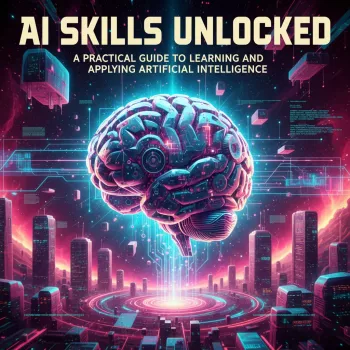
Our AI Skills Unlocked digital eBook is a practical starting point for beginners and professionals who want to learn and apply AI. Rather than chasing instant expertise, you can build a repeatable learning practice that grows with your goals.
Start With a Skill You Can Use
Choose a goal that fits something you do regularly. You might want to understand a difficult concept, organize a set of notes, or draft a routine document. A specific task gives you a useful way to judge whether an AI tool has helped.
For example, instead of asking a tool to “help me learn,” ask it to explain a particular term in plain English. If you are organizing information, describe the categories you need and provide a small sample that does not contain sensitive details. If you are drafting a document, specify its audience and purpose.
This approach works whether you are new to AI or exploring how it might support professional work. A clear goal keeps your practice focused and makes it easier to notice where the response falls short.
Meet AI Skills Unlocked
We offer AI Skills Unlocked as a digital eBook for people who want a practical guide to learning and applying artificial intelligence. It is designed for beginners as well as professionals who want to develop their familiarity with AI.
The eBook is available for $13.99 USD. If you want a dedicated resource to accompany your practice, explore AI Skills Unlocked on its product page.
Turn Learning Into Practice
A useful practice session can be short. Pick one task, ask an AI tool for assistance, check the result, and then revise your request. Comparing the first and second responses can show you how added context or clearer instructions affect the output.
For a beginner-friendly exercise, you could make this request:
“Explain how a budget works at a beginner level. Then suggest one small exercise I can do to practice making a simple budget.”
Read the explanation in your own words before trying the exercise. If the answer assumes knowledge you do not have, ask the tool to define the unfamiliar terms. If the exercise is too broad, request a smaller example with fictional numbers.
| Step | Example action | What to check |
|---|---|---|
| Choose | Pick one everyday task | Is the goal specific? |
| Try | Write a clear request | Does the response address the task? |
| Check | Verify important claims | Can reliable sources support them? |
| Improve | Revise the request and compare results | Is the new response more useful? |
Keep a few notes after each session: what you asked, which details improved the answer, and what still needs checking. Over time, those notes can help you recognize useful patterns without treating every response as automatically correct.
Build Good Habits From the Beginning
AI can produce an answer that sounds confident even when it is inaccurate or incomplete. Verify important facts against reliable sources, particularly when a decision involves health, money, legal matters, or other significant consequences. An AI-generated explanation can be a starting point, but it should not replace qualified advice when you need it.
Protect your privacy, too. Avoid sharing sensitive personal or workplace information unless the tool and its privacy rules permit it. When practicing, use fictional examples or remove identifying details. For a workplace task, follow your organization’s policies before entering any internal information.
Start with low-stakes work and gradually increase the complexity as you become more comfortable evaluating results. Also consider whether AI assistance is appropriate for the situation: a simple brainstorming task is different from a decision that requires human judgment or access to confidential records.
For a broader look at responsible AI use, see the NIST AI Risk Management Framework and UNESCO’s guidance on generative AI in education and research.
Find Your Next Practice Project
Try asking an AI tool to simplify a topic you have found confusing. Then compare its explanation with a trustworthy source and write a short summary yourself. Our Simplification with AI-Generated Explanations checklist is an optional companion if you want a checklist for working through complex topics.
Another project is to draft a travel itinerary using a destination, trip length, and general interests. Review opening hours, transportation options, costs, and other important details independently before making plans. The exercise helps you practice refining a request while keeping final decisions in your hands.
Ready to make practice part of your routine? Explore our AI Skills Unlocked digital eBook and choose one manageable task to begin.
FAQ
Is AI Skills Unlocked suitable for beginners?
Yes. AI Skills Unlocked is presented as a practical guide to learning and applying AI for beginners as well as professionals.
Do I need to be a programmer to start learning AI skills?
No. Many introductory uses involve communicating clearly with AI tools and evaluating their outputs, though programming may be useful for more technical goals.
How can I practice AI skills safely?
Start with low-stakes tasks, verify important outputs, and avoid sharing sensitive information without understanding the tool’s privacy terms.




Leave a comment