Smart Health: Use AI to Track Your Wellbeing
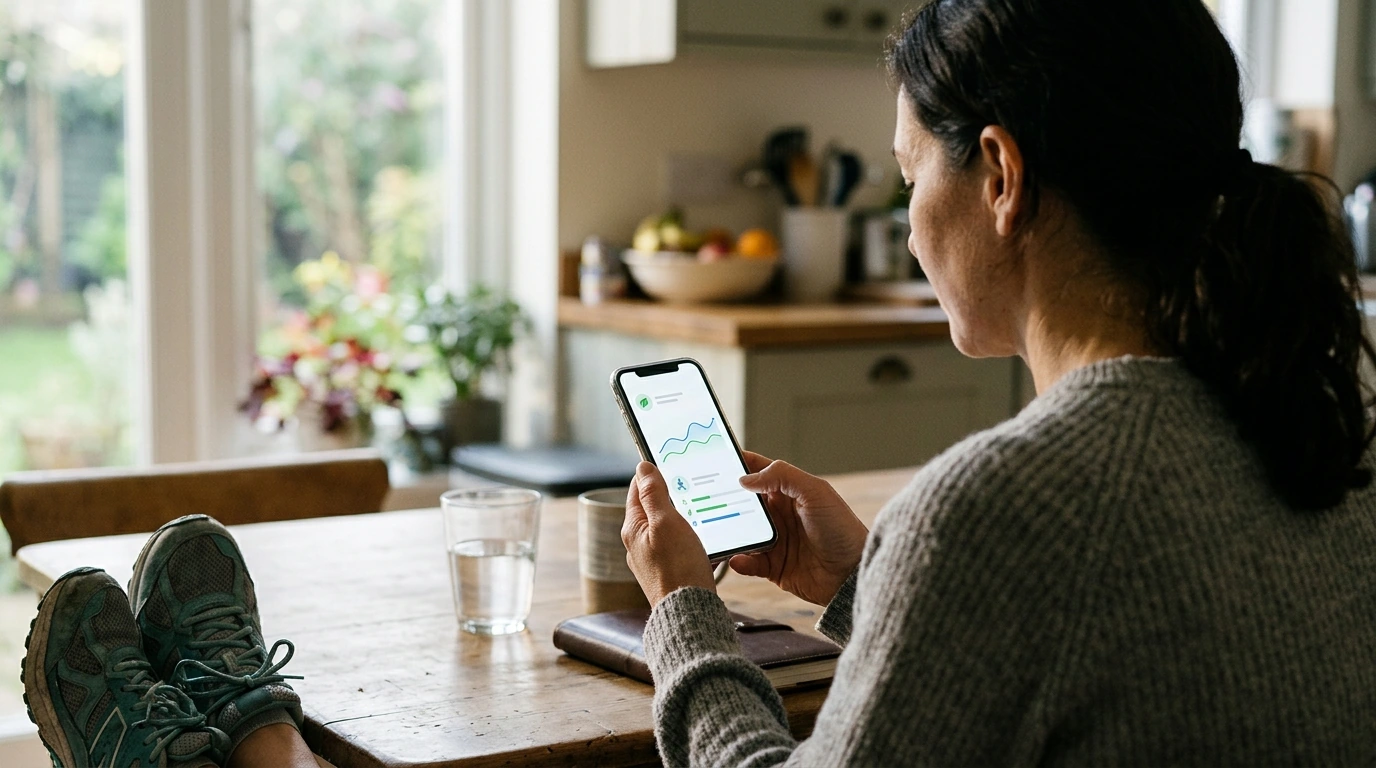
Everyday wellbeing can be easier to understand when you notice how your routines and experiences change over time. A few notes about sleep, movement, mood, or energy can give you a useful starting point for reflection—and help you prepare questions for a healthcare professional.
Our team sees AI as one possible aid in that process: it can organize information and suggest questions, but it cannot replace medical care. Smart Health: Harnessing AI to Track and Improve Your Wellbeing is an option for exploring how AI can support everyday wellbeing habits.
A Smarter Approach to Everyday Wellbeing
It can be hard to remember exactly when your energy dipped or whether a change in routine coincided with a different night’s sleep. Consistent notes give you something more concrete to review. They do not need to be detailed: a few words at roughly the same time each day can be enough to make observations easier to compare.
Over time, you might notice that certain activities fit comfortably into your week or that your energy tends to vary at particular times. These observations are starting points, not proof that one thing caused another. Many factors can influence how you feel, and a short record cannot account for all of them.
AI can help sort notes into a summary or suggest questions you had not considered. Its responses can also be incomplete or wrong, even when they sound confident. The World Health Organization’s guidance on AI for health discusses the importance of responsible use and human oversight.
Start With One Habit to Track
Choose an area that matters to you and feels manageable. If you want to understand your sleep routine, record when you go to bed and wake up, along with how rested you feel. If energy is your focus, note your energy level and the time of day. You might also add brief context, such as what you ate, without assuming it explains how you feel.
Keep your approach simple enough to continue for a week. There is no need to collect every possible detail, and tracking alone does not guarantee a health outcome. These ideas can help you decide where to begin:
| Area | What to note | Question to explore |
|---|---|---|
| Sleep | Bedtime, wake time, and perceived restfulness | Do changes in my routine coincide with better rest? |
| Activity | Type and duration of movement | Which activities fit comfortably into my week? |
| Energy | Energy level and time of day | When do I tend to feel most alert? |
| Mood | A brief mood note and relevant context | Are there recurring situations I want to discuss? |
After a week, decide whether your notes are useful. You can continue, simplify the record, or choose a different area. The goal is to support your awareness, not turn every part of your day into a measurement.
Use AI as a Wellbeing Assistant
Once you have a few entries, you can ask an AI tool to organize them. For example:
“Summarize these anonymized habit notes from the past week. Identify any recurring observations without assuming cause and effect, and suggest three questions I could consider or discuss with a healthcare professional.”
Read the summary alongside your original notes. Did the tool leave out context, misstate a date, or suggest a pattern based on only one or two entries? Ask it to clarify its summary if needed, but do not treat its interpretation as a diagnosis or treatment recommendation.
Check health-related suggestions against reliable sources. MedlinePlus offers guidance on evaluating health information, including how to consider a source’s purpose and reliability. If you notice concerning symptoms or significant changes, discuss them with a qualified clinician rather than relying on an AI response.
Keep Your Health Information Private
Before sharing notes, review the AI service’s privacy settings and data practices. Look for information about how entries are stored, whether they may be used to improve the service, and what options you have to delete them. Settings and practices vary, so choose what you share with care.
Where possible, omit your name, contact details, and other identifying information. You can also leave out sensitive details that are not needed for the question you want answered. Anonymization can reduce exposure, but it may not eliminate privacy risks: combinations of details can sometimes identify a person.
If you prefer not to share your notes with an AI service, you can still review them yourself or bring them to an appointment. A concise record can help you remember what you want to discuss.
Explore Smart Health
If you want to explore the intersection of AI and personal wellbeing, Smart Health: Harnessing AI to Track and Improve Your Wellbeing is available for $11.99 USD. Visit the product page for current purchasing details.
For a different focus, our AI Wellness Journal is a separate option for readers interested in symptom logging. Consider whether your immediate priority is exploring AI and everyday habits or keeping a record of symptoms to discuss with a clinician.
FAQ
Can AI diagnose health conditions from tracking notes?
No. AI can help organize notes, but it can make mistakes and should not replace an assessment by a qualified healthcare professional.
What should I track first?
Choose one area that matters to you, such as sleep or energy, and record a few consistent observations over time.
Is it safe to share health information with an AI tool?
Privacy depends on the service and its settings. Review its data practices and avoid sharing identifying or sensitive details unless necessary.





Leave a comment